


 전시 정보
전시 정보
-
Date.2026. 9. 30 – 10. 27
-
Title.The Language of Landscape
-
Artist.이대천 Lee Daecheon
-
Address.대구광역시 수성구 들안로 13길 66-1, 1층
-
Tel.053 – 781 - 6802
-
Web.
![작품이미지 1_9월_[갤러리 팔조]. jpg..jpg](http://gadg.or.kr/upload/cheditor/20261005102508_ugzhdhit.jpg)
![작품이미지 2_9월_[갤러리 팔조],jpg.jpg](http://gadg.or.kr/upload/cheditor/20261005102510_cbcxvnnq.jpg)
![작품이미지 3_9월_[갤러리 팔조]. jpg.jpg](http://gadg.or.kr/upload/cheditor/20261005102512_kilyebxd.jpg)
![작품이미지 4_9월_[갤러리 팔조].jpg.JPG](http://gadg.or.kr/upload/cheditor/20261005102513_ndvhenuu.jpg)
![작품이미지 5_9월_[갤러리 팔조]. jpg.JPG](http://gadg.or.kr/upload/cheditor/20261005102515_hwudsxcb.jpg)
![작품이미지 6_9월_[갤러리 팔조]. jpg.JPG](http://gadg.or.kr/upload/cheditor/20261005102516_opympddp.jpg)
![작품이미지 7_9월_[갤러리 팔조]. jpg.jpg](http://gadg.or.kr/upload/cheditor/20261005102517_htbfxfod.jpg)
![작품이미지 8_9월_[갤러리 팔조]. jpg.jpg](http://gadg.or.kr/upload/cheditor/20261005102519_yxdywkuz.jpg)
![작품이미지 9_9월_[갤러리 팔조]. jpg.JPG](http://gadg.or.kr/upload/cheditor/20261005102521_rgyocghz.jpg)
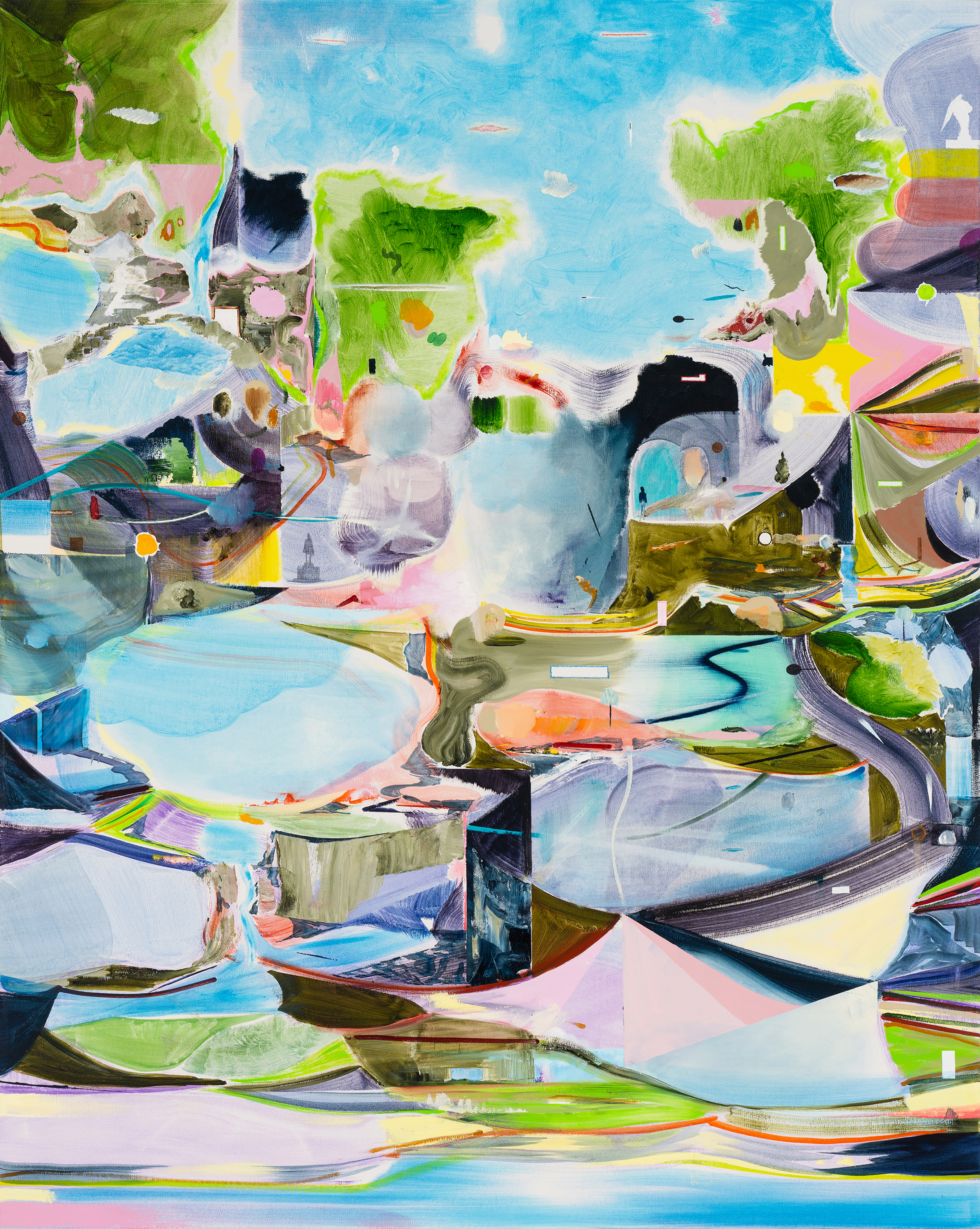
이대천은 한국과 독일 드레스덴, 베를린에서 회화를 수학했으며, 20년 이상 독일을 기반으로 활동하고 있다. 동양 산수화에서 출발한 그의 작업은 한국 전통 회화의 정신과 현대적 조형 언어를 결합하며 독자적인 풍경화의 세계를 발전시켜 왔다. 작가는 자신의 작업을 ‘세상 그리기’라고 말하며, 개인적 기억과 경험, 자연과 일상의 이미지, 그리고 세계를 구성하는 다양한 요소들이 관계 맺는 방식을 담아낸다.
그의 회화는 추상과 구상, 시간적·공간적·문화적 요소와 기억과 현실의 이미지들이 복합적으로 중첩되고 병렬적으로 펼쳐지며 하나의 다층적인 풍경을 형성한다. 선과 면, 색과 형태는 단순한 조형 요소를 넘어 세계를 이루는 작은 단위로 작용하며, 각각의 형상은 서로 연결되고 변화하면서 화면 안에서 새로운 관계를 만들어낸다. 이대천의 풍경은 특정 장소를 재현한 이미지가 아니라, 끊임없이 변화하고 연결되는 세계의 감각을 담은 하나의 세계이다. 다양한 시각적 요소들이 관계를 맺으며 형성하는 그의 작품은 자연과 인간, 기억과 현실이 교차하는 열린 공간으로서 관람자 각자의 경험과 해석에 따라 확장되는 회화적 세계를 구축한다.
이번 전시에 대해 작가는 “특정한 장소를 재현한 풍경이 아니라, 기억과 감정, 그리고 모든 존재의 흐름으로 이루어진 하나의 세계를 담고 있다. 화면 위의 선과 색, 겹겹이 쌓인 흔적들은 우연과 질서가 교차하며 끊임없이 변화하는 풍경을 만들어낸다. 추상과 구상의 경계를 넘나드는 이 풍경은 하나의 이야기를 설명하기보다 관객 각자의 기억과 감각을 불러낸다. 서로 연결되어 있으면서도 끝없이 변화하는 세계, 그 흐름 속에서 저마다의 풍경을 발견하기를 바란다.”
Lee Daecheon studied painting in Korea, as well as in Dresden and Berlin, Germany, and has been based in Germany for over 20 years. Beginning with East Asian landscape painting, his practice has developed a distinctive approach to landscape by combining the spirit of traditional Korean painting with contemporary visual language. The artist describes his practice as “Drawing the World,” exploring the relationships among personal memories and experiences, images from nature and everyday life, and the various elements that make up the world.
His paintings bring together abstract and figurative elements, along with temporal, spatial, and cultural aspects, as well as images of memory and reality. These elements overlap and unfold in parallel, forming multilayered landscapes. Lines, planes, colors, and forms are not merely visual elements, but small units that constitute the world. Each for connects and transforms through its relationship with others, creating new relationships within the composition.
Daecheon Lee’s landscapes do not simply represent specific places or subjects. Images drawn from nature and everyday life, along with personal memories and experiences, come together on a single canvas, creating new landscapes through their relationships with one another. Rather than presenting a single, predetermined narrative, his paintings leave open the possibility of being interpreted differently through each viewer’s own experiences and sensations.
Regarding the works in this exhibition, the artist says: “The works in this exhibition do not depict specific places, but rather a world shaped by memory, emotion, and the continuous flow of all living things. Layers of lines, colors, and accumulated traces create landscapes where chance and order coexist in constant transformation. Moving between abstraction and representation, these landscapes do not seek to tell a single story. Instead, they invite viewers to discover their own memories and sensations within them—a world that is endlessly changing, yet profoundly interconnected.”
ARTIST STATEMENT
이대천 |혼돈과 질서가 공존하는 풍경, 풍경의 언어
내가 그리고 싶은 것은 하나의 세계이다. 개인적인 기억과 모든 것들의 순환을 담은 거대한 지도. 세계를 바라보는 시선은 사람마다 다르다. 모호함과 부조리, 알 수 없는 시작과 끝, 존재하는 모든 것들의 변화. 그럼에도 모든 것은 어딘가에서 서로 연결되어 있다는 막연한 확신이 있다. 나에게 회화는 어쩌면 그 연결의 흔적을 더듬어 가는 과정인지도 모른다.
형태로 붙잡히지 않는 것을 붙들고, 말로 설명할 수 없는 감각을 색과 형태로 조율한다. 그림 안에는 무엇인가 있는 듯하면서도 없는 듯한 상태를 만들어 보려 한다. 오히려 그것이 실재와 더 닮아 있다고 생각한다. 세계를 말로 설명하기에는 너무 협소하고, 그림으로 완전히 담아내기에는 더욱 모호하다. 그러나 바로 그 모호함이 세계의 본질과 더 가깝다.
그림을 그린다는 것은 언제나 '무(無)'에서 무엇인가를 더해 가는 일이다. 하지만 더하면서도 의도적으로 무엇인가를 만들어 내려 하지 않을 때, 조형적 의지를 밀어붙이기보다 거부하는 그 사이에서 묘한 긴장감이 만들어진다. 규정할 수 없다는 것만큼 진실한 것은 없다.
그림 속의 형태와 색은 특정 대상을 재현하거나 미리 계획된 색의 조합이 아니다. 그것들은 순간의 선택에 의해 나타난다. 형태와 색에 대한 감각은 이미 경험으로 내 안에 축적되어 있기 때문에 밑그림은 존재하지 않는다. 선과 선은 아슬아슬하게 맞닿고, 면과 면은 서로를 침범하며, 색과 색은 충돌하여 새로운 색을 만들어 낸다. 이러한 화면은 추상성을 띠지만, 무의식의 심상에는 언제나 자연 세계가 스며든다. 길거리에서 본 고양이, 나무와 나비, 호수와 바다, 일상의 사물들을 사진이나 드로잉으로 수집한 뒤 캔버스 위에 무작위로 흩어 놓는다. 그림 안에서 각각의 요소들은 상대적인 위계를 갖지 않는다. 모든 요소는 전체를 위해 동등한 가치를 지닌다.
비거나 더해질 수 없는 상태를 향해 계속 그리고, 다시 지운다. 이러한 방식의 회화는 오랜 시간과, 그리는 시간보다 더 긴 바라보는 시간을 필요로 한다. 공간은 가볍게 시작되지만 끊임없는 수정 속에서 형성된다. 끝이 보이지 않는 시도를 반복하며, 순환하고 이어지는 하나의 풍경을 찾아간다. 색의 흐름과 레이어의 중첩은 무정형 속에서 질서를 발견하고 만들어 가는 과정이다.
화면 곳곳에 등장하는 무지개, 배, 산, 사람, 동물과 같은 구체적인 대상들은 관객에게 하나의 이야기로 이어질 수 있는 단서를 제공한다. 그것들은 정답을 제시하기보다 감상의 즐거움과 각자의 해석을 열어 두는 장치이다. 나의 작업은 산수화에서 출발했으며, 한국의 화론으로부터 많은 영감을 받았다. 특히 크고 작은 형태, 빠르고 느린 선, 밝음과 어둠, 거침과 부드러움, 무심함과 집착 같은 대비는 화면을 구성하는 중요한 원리이다.
이번 전시의 작품들 또한 특정한 지리나 시간을 재현한 풍경이 아니다. 그것들은 의문과 흐름으로 이루어진 감정의 지형도이다. 겹겹이 쌓인 흔적과 특별한 방향 없이 이어지는 선들은 삶이 지닌 유동성과 불확실성을 드러낸다. 그것은 지금 이 순간, 우리 모두가 어딘가를 향해 나아가고 있는 풍경이다. 내가 보고 느끼는 모든 것은 명확하게 붙잡히지 않고 쉽게 설명되지 않는다. 세계는 본질적으로 부조리하며, 그렇기에 무엇도 고정된 형태로 그려 내기 어렵다. 결국 화면은 익명의 공간으로 남는다. 하지만 완성된 그림은 다시 하나의 고정된 이미지가 되고, 하나의 정의가 된다. 그래서 나는 다시 다음 그림으로 넘어간다. 끝없이 그려야만 한다. 어쩌면 끝내 도달할 수 없는 길을 계속 걸어가는 일인지도 모른다.
19세기 비평가 비토리오 임브리아니(Vittorio Imbriani)가 언급한 마키아(macchia) 개념은 이후 한스 제들마이어(Hans Sedlmayr)가 페터 브뤼헐의 회화를 구조적으로 분석하는 과정에서 다시 주목한 개념이다. 마키아는 어떤 대상이나 풍경을 멀리서 바라볼 때 가장 먼저 떠오르는 첫인상, 즉 최초의 특징적인 시각적 효과를 의미하며, 이탈리아어로는'색의 반점'을 뜻한다. 우리는 그림과 처음 마주하는 순간, 개별 형상을 인식하기 이전에 화면을 이루는 색의 덩어리와 색점들이 만들어 내는 정서적 인상을 먼저 경험한다. 제들마이어는 바로 이러한 최초의 정서적 효과를 만들어 내는 힘이 예술 작품의 중요한 본질이라고 보았다.
나의 작업 또한 구체적인 형상을 읽기 이전에 색과 흔적, 화면 전체가 만들어 내는 첫인상을 중요하게 생각한다. 각각의 형태는 명확한 의미를 갖기보다 서로 관계를 맺으며 하나의 풍경을 이루고, 그 풍경은 관객 안에서 또 다른 기억과 감정을 불러일으킨다. 결국 내가 그리고자 하는 것은 하나의 대상을 재현하는 일이 아니라, 세계를 처음 마주하는 감각 그 자체에 가까운 풍경이다.
Landscapes Where Chaos and Order Coexist: The Language of Landscape
What I seek to paint is a world—a vast map that contains personal memories and the continuous cycle of all things. Each person perceives the world differently. Ambiguity and absurdity, beginnings and endings that remain unknowable, the perpetual transformation of everything that exists—and yet, beneath it all, I hold a vague but persistent conviction that everything is somehow connected. For me, painting is perhaps a process of tracing the remnants of those invisible connections.
I attempt to grasp what cannot be given form, translating sensations that resist language into color and shape. Within the painting, I create a state in which something seems to exist and yet remain absent. I believe this comes closer to the nature of reality itself. Words are too limited to explain the world, and painting can never fully describe it either. Yet it is precisely this ambiguity that feels closest to the world as we experience it.
To paint is always to add something to nothingness. Yet when I add without trying to deliberately construct an image, when I resist rather than impose formal intention, a peculiar tension emerges between making and refusing to make. There is perhaps no greater truth than the impossibility of defining.
The forms and colors in my paintings do not represent specific objects, nor are they the result of predetermined compositions. They arise from immediate decisions made in the act of painting. Since the choices of form and color already exist within me as accumulated experience, I begin without preparatory drawings. Lines barely touch one another, planes overlap and invade each other, and colors collide to create new colors. Although the resulting images become increasingly abstract, the natural world inevitably enters my unconscious imagination. Cats encountered on the street, trees, butterflies, lakes, the sea, and ordinary objects are collected through photographs and drawings before being scattered across the canvas in seemingly random arrangements. Within the painting, no element possesses greater importance than another. Every element exists with equal value for the sake of the whole.
The work is repeatedly painted and erased in pursuit of a state where nothing more can be added and nothing can be removed. This process requires not only time but an even greater amount of looking than painting. The composition begins lightly and is continuously revised. Through an endless cycle of attempts, I search for landscapes that continue without conclusion. The flow of color and the accumulation of layers become a process of discovering order within the formless.
Occasionally, recognizable motifs—rainbows, boats, mountains, people, and animals—appear throughout the paintings. These elements provide viewers with narrative clues, inviting multiple interpretations and the pleasure of constructing their own stories. My practice began with traditional East Asian landscape painting (Sansuhwa) and has been deeply inspired by Korean painting theory. Contrasts—between large and small forms, fast and slow lines, light and darkness, roughness and softness, detachment and obsession—form essential principles within my compositions.
The works in this exhibition do not depict landscapes tied to a particular geography or moment in time. Rather, they are emotional topographies composed of questions and continuous movement. Layered traces and lines without fixed direction reflect the fluidity and uncertainty inherent in our lives. They are landscapes of this very moment, as we move toward somewhere unknown. Everything I see and experience resists precise definition. The world appears fundamentally absurd, making it difficult, perhaps impossible, to depict anything as fixed or absolute. In the end, the paintings remain anonymous spaces. Yet once a painting is completed, it too becomes fixed—defined as a single image. That is why I move on to the next painting, and then the next. I feel compelled to continue painting endlessly, as though I am walking a path that can never truly be reached.
The nineteenth-century critic Vittorio Imbriani introduced the concept of *macchia*, which was later revisited by Hans Sedlmayr in his structural analysis of Pieter Bruegel’s paintings. *Macchia*, literally meaning “a spot of color” in Italian, refers to the immediate visual impression that arises when a landscape or object is seen from a distance—the first characteristic image that appears before detailed perception. Before recognizing individual forms, viewers first encounter the emotional resonance created by masses of color. Sedlmayr regarded this immediate emotional impact as one of the essential powers of a work of art.
My own paintings also prioritize this first encounter. Before recognizable forms are read, I hope the colors, traces, and the overall presence of the painting evoke an immediate sensory response. Rather than conveying fixed meanings, individual forms exist through their relationships with one another, together creating a landscape that awakens memories and emotions unique to each viewer. Ultimately, what I seek to paint is not the representation of a place or an object, but a landscape that approaches the very experience of first encountering the world. Lee Daecheon 2026